
 Image 1 of 1
Students experiment, test, and redesign as they build, learning through trial and error just like real engineers. The class emphasizes creativity, problem-solving, and collaboration while introducing foundational engineering concepts in a fun, age-appropriate way.
What Students Will Learn
Structural Engineering Basics
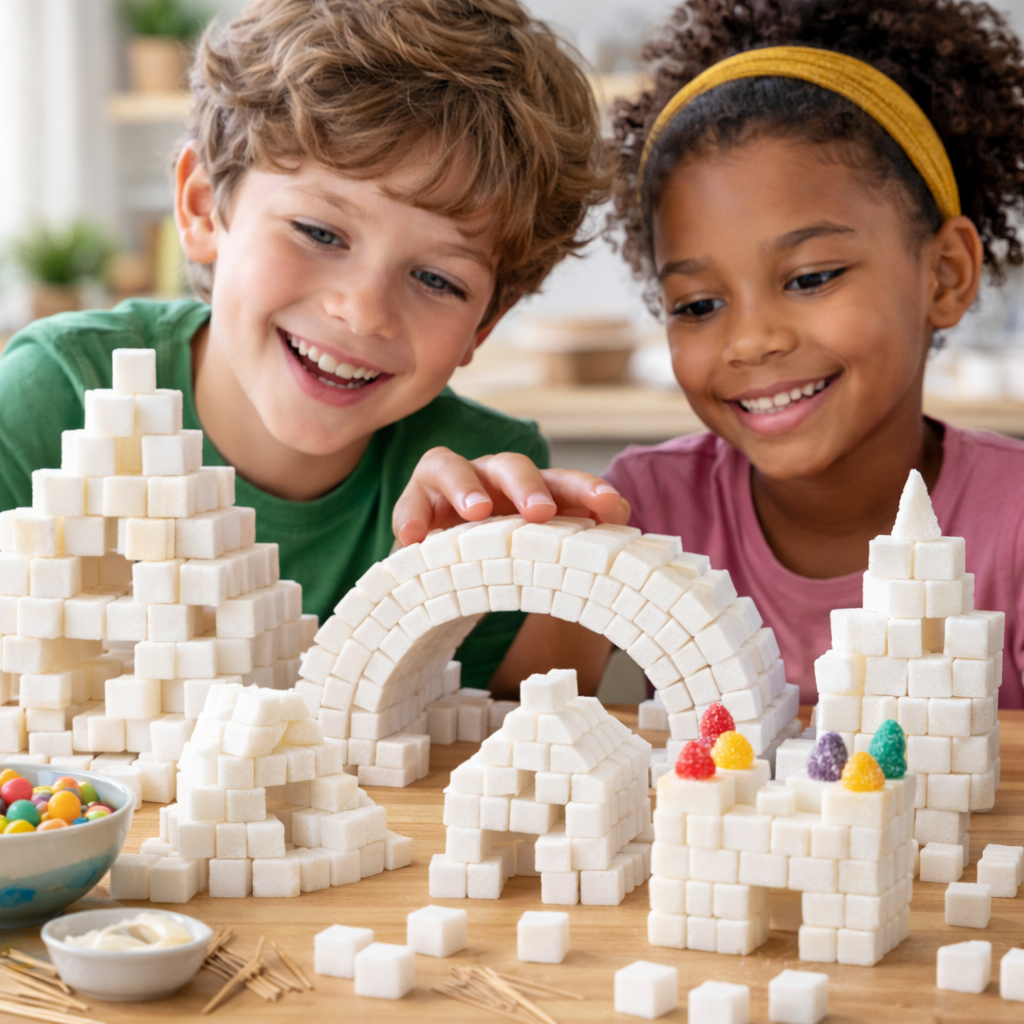
Students learn how different shapes (arches, pyramids, cubes) distribute weight and why some designs are stronger than others.Why Arches Are Strong
Through hands-on construction, students discover how arches transfer forces downward and outward, making them one of the strongest structural forms used in bridges and buildings around the world.Load, Balance, and Stability
Students test how much weight their structures can hold and observe how balance and symmetry affect stability.Design–Build–Test–Improve Cycle
Students practice the core engineering process: planning a design, building it, testing it, identifying failures, and improving the structure.Teamwork and Communication
When working in groups, students learn how to share ideas, divide tasks, and explain their design choices.Creative Problem Solving
With limited materials, students must think critically and creatively to achieve strong, functional designs.
By the end of the class, students will understand that engineering is not about getting it right the first time—it’s about learning from failure, improving designs, and discovering how simple materials can create powerful structures.